Made Open Document Formats Mandatory: Why Germany’s .docx Exit is a Geopolitical Kill Switch

Germany’s move to mandate the Open Document Format (ODF) across all government levels signals a decisive challenge to American tech dominance, particularly Microsoft. This initiative aims to eradicate vendor lock-in and the associated “Microsoft Tax” on public data, forming part of a broader European shift toward digital sovereignty and reduced reliance on proprietary software.

​I have watched the European Union flirt with “digital sovereignty” for over a decade, but the latest shift in Berlin feels different. The images I analyzed regarding the “Deutschland-Stack” reveal a calculated strike against American tech hegemony. By mandating the Open Document Format (ODF) across all government levels, Germany is systematically dismantling a twenty-year monopoly.

Germany's Deutschland-Stack made open document formats mandatory for all government agencies.

​This isn’t just a boring change in file extensions from .docx to .odt. It is a structural demolition of “vendor lock-in” designed to strip Microsoft of its most potent weapon: proprietary formatting. When a government standardizes on a closed format, it effectively taxes every citizen and contractor who must buy a license to communicate with the state.

​The End of the “Microsoft Tax” on Public Data

​I view this mandate as an “emancipation proclamation” for public data. In my experience working with high-security banking systems like SWIFT, I know that proprietary “black box” formats are a liability. If the format is open, the competition finally shifts from who owns the file to who builds the best tool to edit it.

FeatureMicrosoft (.docx)Deutschland-Stack (ODF)
OwnershipProprietary (Microsoft)Open Standard (ISO/IEC)
LicensingPaid/SubscriptionFree/Open Source
InteroperabilityFragile/FrustratingNative/Identical
Strategic GoalMarket DominanceDigital Sovereignty

A Historical Pivot from Munich’s Failure

​I remember the “LiMux” experiment in Munich back in 2004. It was a bold attempt to switch to Linux that eventually collapsed in 2017 due to political pressure and compatibility nightmares. Critics often cite this as proof that open-source cannot scale, but they ignore the shift in the global geopolitical landscape.

​Unlike the Munich pilot, the Deutschland-Stack is a binding country-level mandate covering federal, state, and municipal levels. According to reports from Reuters, Germany is no longer just “recommending” open-source; they are making it the law. This creates a “point of no return” where the billions spent on licensing fees become legally and ethically impossible to justify.

​The Rise of the European Digital Fortress

​Germany isn’t acting in a vacuum. I see this as part of a broader European “breakup” with American tech giants. France has already migrated half a million workstations to LibreOffice, and Denmark is aggressively switching ministries to Linux.

​The analytical insight here is simple: Germany is building a “Digital Fortress.” By controlling the stack—from the OS to the file format—they are insulating their public administration from foreign surveillance and arbitrary price hikes. The “Deutschland-Stack” is the blueprint for a post-Microsoft world.

​The Unresolved Close: Who Wins the Desktop?

​Microsoft isn’t banned yet, but its “privileged status” in the G7 is dead. I am left wondering how Redmond will react as its DNA is systematically scrubbed from German infrastructure. If the .docx monopoly breaks in Berlin, will the rest of the world continue to pay the “Microsoft Tax”?

AI Voice Recorder: Revolutionizing Note-Taking Today

The era of frantic note-taking and forgotten conversations has reached its expiration date. While the traditional voice recorder was a passive observer, the modern AI Voice Recorder serves as an active participant in your cognitive workflow. I believe it does not merely archive sound; instead, it decodes intent. By integrating large language models (LLMs) like GPT-4o, these devices transform the chaotic vibrations of human speech into structured, actionable intelligence. Therefore, whether you are navigating a complex medical consultation or a high-stakes corporate briefing, your objective is no longer just to record. Rather, you must aim to remember with precision.

The Sophisticated Evolution of the AI Voice Recorder

To understand the current landscape, you should look beyond the microphone. An AI voice recorder is a hardware-software hybrid that utilizes Neural Machine Translation (NMT) and advanced diarization algorithms. These systems distinguish between multiple speakers in a crowded room, and they effectively “tag” each individual’s contributions. Consequently, the AI Voice Recorder represents a shift from raw data storage to instant synthesis. It provides a level of clarity that the human brain simply cannot maintain, as we are often hampered by the “forgetting curve”.

The “So What?” Test: Why does this matter? Because human memory is fallible. Research suggests we forget 50% of new information within an hour. AI audio tools act as an external hard drive for your consciousness; they ensure that the “hidden truth” of a conversation is never lost to the fog of a busy day.


A Credible Foundation: The Data Behind the Audio Revolution

The adoption of AI audio tools is not merely a trend; it is a fundamental shift in human-computer interaction. In 2026, the global market for speech-to-text and AI summarization is growing aggressively. This growth is driven by significant “Information Gain” in two specific areas:

Global Market Analysis and Real-Time STT Growth

Current industry reports indicate that the real-time speech-to-text market is expanding rapidly as enterprises prioritize efficiency.

  • Error Rate Reduction: Accuracy for top-tier AI recorders has reached unprecedented levels.
  • Enterprise Compliance: Industry data suggests enterprise-grade STT (Speech-to-Text) solutions are now essential for maintaining professional compliance.

High-Fidelity Transcription in Specialized Research

  • Pharmacological Accuracy: Insights from my daughter, Dr. Fareha Jamal (Research Associate at BioNTech SE), suggest that mRNA research documentation now relies on high-fidelity transcription to capture complex experimental parameters.
  • Clinical Improvement: In clinical settings, Dr. Maryam Jamal (Junior Resident) observes that patient care improves when physicians use specialized tools to automate SOAP notes. These tools reduce physician burnout by up to 63%.

Navigating the Practicality of AI Audio

Is the acquisition of an AI recorder a necessity for the average person? I argue the answer lies in the concept of “Cognitive Load”. Imagine a student sitting in a lecture. The avoidance of manual writing allows for deeper conceptual processing. However, academic reviews warn of “pedagogical debt,” which is the risk that AI becomes a crutch rather than a scaffold.

Digital Records as a Single Source of Truth

Nevertheless, this technology acts as a bridge. For the man or woman managing a household, recording a conversation provides a “single source of truth”. There is an inherent power in being able to search your own life’s conversations. It is an original analogy: if your life is a book, the AI voice recorder is the index and the executive summary.

Comparison of Leading AI Audio Solutions

FeaturePLAUD NOTEOtter.aiElevenLabs
Primary UseDedicated HardwareSoftware TranscriptionVoice Generation
AccuracyPowered by OpenAI WhisperReal-time Web/VoIPIndustry-leading fidelity
Best ForIn-person/Phone CallsRemote MeetingsContent Creation

Conclusion: The Passionate Case for Audio Intelligence

The integration of artificial intelligence into our auditory lives is a transformative milestone. We are moving toward a world where the spoken word is as durable and searchable as the written one. This transition offers a profound sense of security; moreover, it ensures that our ideas and agreements are preserved with academic rigor.

As an Expert Editor, I find that these tools do not replace human creativity. Instead, they provide the “Credible Foundation” upon which we build our stories. I used AI as a tool alongside human expertise to curate this analysis.

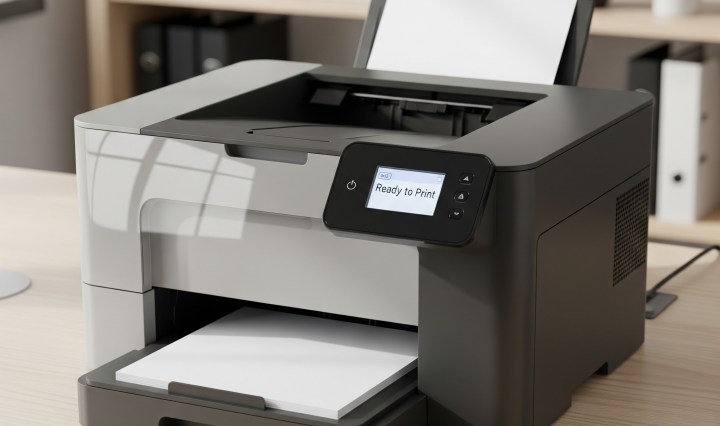
Laser Printers: Types and Home Use Recommendations

Laser printers are known for their speed, precision, and low cost per page, making them a popular choice for both office and home use. They operate by using a laser beam to project an image onto a drum, which then attracts toner (a fine powder) that is fused onto the paper with heat.

Laser Printers

Types of Laser Printers

Laser printers can be broadly categorized based on their color capability and function.

By Color Capability

1. Monochrome (Black and White) Laser Printers

These printers use a single black toner cartridge and are designed exclusively for printing text and images in black and white.

  • Pros: They are typically faster, have a lower upfront cost, and the toner cartridges are cheaper than color ones.
  • Cons: Cannot print in color.
  • Best for: High-volume text printing, professional documents where color is not required.

2. Color Laser Printers

Color laser printers use four separate toner cartridges—Cyan, Magenta, Yellow, and Black (CMYK)—to produce full-color documents.

  • Pros: Can print vibrant, high-quality color documents, graphics, and photos.
  • Cons: Higher initial cost, and the cost of replacing four toner cartridges is significantly higher than one black cartridge. They can also be larger and slower than monochrome models.
  • Best for: Marketing materials, reports with color charts, presentations, and general-purpose home and office use where color is necessary.

By Function

1. Single-Function Laser Printers

These printers are dedicated solely to printing. They are simple, often compact, and focus on delivering high-quality printouts efficiently.

2. Multifunction Printers (MFPs) or All-in-One (AIO) Laser Printers

MFPs combine multiple functions into one device, typically including printing, scanning, copying, and often faxing.

FunctionDescription
PrintProduces hard copies from digital files
ScanConverts hard copies into digital files
CopyMakes duplicates of hard copies
FaxTransmits documents over a telephone line
  • Pros: Space-saving, cost-effective (compared to buying four separate devices), and convenient for home offices.
  • Cons: If one component breaks, the entire unit may be affected. The size is generally larger than a single-function printer.
  • Best for: Users who need more than just printing, such as students, freelancers, and small businesses.

Which Laser Printer Type is Good for Homes?

For most home users, the ideal laser printer strikes a balance between functionality, size, and cost.

Primary Recommendation: Monochrome Multifunction Laser Printer

A Monochrome Multifunction (All-in-One) Laser Printer is generally the best choice for the average household or home office, due to the following reasons:

  1. Cost-Effectiveness: The upfront cost is lower than a color laser, and the running cost (toner) is minimal, as most home printing is black text.
  2. Versatility: The scanning and copying functions are essential for managing bills, schoolwork, and digitalizing important documents.
  3. Speed and Quality: They provide rapid printing of text documents with sharp, professional-grade quality.

Secondary Recommendation: Color Multifunction Laser Printer

A Color Multifunction (All-in-One) Laser Printer is a better fit if color printing is a frequent necessity.

  • Who should choose this: Families with students who require color reports, or home-based professionals who print marketing materials or presentations with color graphs.

Before purchasing, consider reviewing the user guide in the document File, and make sure to check if the printer is compatible with your operating system, which is mentioned in the event Calendar event.

When Beijing Holds the World’s Tech Industry Hostage

How China’s Rare Earth Stranglehold Exposes the Fatal Flaw in Western Industrial Strategy

“Without reliable access to these elements, automotive suppliers will be unable to produce critical automotive components, including automatic transmissions, throttle bodies, alternators, various motors, sensors, seat belts, speakers, lights, motors, power steering, and cameras.” — Alliance for Automotive Innovation, May 2025

Mercedes-Benz executives met in emergency meetings this spring. They discussed supply chain protection strategies. They weren’t worried about semiconductor shortages or shipping delays. They faced a more fundamental threat. China could choke off the supply of materials so basic to modern manufacturing. Most consumers have never heard of them. Without these materials, their cars simply cannot be built.

This isn’t just another trade spat. It’s a masterclass. It shows how a determined adversary can exploit decades of Western complacency. They can hold entire industries hostage with the stroke of a bureaucratic pen.

The Stranglehold Tightens

On April 4, 2025, Donald Trump’s tariffs reached a staggering 145% on Chinese products. Beijing’s retaliation was swift and surgical. China imposed export restrictions on seven rare earth elements—samarium, gadolinium, terbium, dysprosium, lutetium, scandium, and yttrium. These aren’t household names. However, they are the DNA of every smartphone, electric vehicle, wind turbine, and F-35 fighter jet on the planet.

The mechanism is elegantly simple: a licensing system requiring government approval for each shipment. No outright ban—just bureaucratic friction that can throttle supply at will. Within weeks, European auto parts plants began shutting down. American defense contractors watched lead times stretch from 60 to 120 days. German automakers warned of production collapses that would “rattle their local economies.”

What makes this particularly devastating is the scope of China’s dominance. Beijing controls 90% of global rare earth production. It controls 87% of processing. It also controls an astonishing 99% of heavy rare earth elements like dysprosium. To put this in perspective: if China’s rare earth industry were a person, it could shut down Tesla. It could also shut down General Motors, Siemens, and Lockheed Martin. This person would achieve that simultaneously by simply deciding not to answer the phone.

Europe Caught in the Crossfire

The most telling aspect of this crisis isn’t American vulnerability—that was predictable given the escalating trade war. Europe, despite its careful diplomatic positioning, finds itself as collateral damage. It is in a conflict it didn’t start and cannot control.

European Commission trade chief Maros Sefcovic held urgent meetings with Chinese officials in Paris. These interactions revealed an uncomfortable truth. Europe has no leverage. The EU’s preference for “systematic solutions” like annual licensing agreements sounds reasonable. However, they’re essentially begging for the privilege of continued dependence. When your counterpart controls the tap, requests for “more efficient water flow” aren’t negotiations—they’re pleas.

The numbers tell the story starkly. Of hundreds of export license applications submitted by European auto suppliers since April, only one-quarter have been approved. Mercedes-Benz suppliers receive “a limited number” of licenses. BMW reports supply network disruptions. Volkswagen—Europe’s automotive crown jewel—depends on Chinese approvals for the magnets that power its electric future.

This is what strategic vulnerability looks like in practice. Entire industrial ecosystems are reduced to waiting for bureaucratic approvals. These approvals come from a country that views trade as warfare by other means.

The Japanese Exception That Proves the Rule

There’s one notable exception to this widespread panic: Japan. In 2010, Chinese fishing vessels sparked a territorial dispute. Beijing’s rare earth embargo taught Tokyo a significant lesson. This is a lesson the West is only now learning. Japan’s response wasn’t to file WTO complaints or form study groups—it was to build alternative supply chains.

Today, Japan’s rare earth dependency on China has dropped from 90% to 60%. The secret? Strategic patience and genuine partnership. Japan didn’t just invest in mining. It held hands with suppliers through price crashes. Japan provided patient capital during development phases. It treated supply chain resilience as a national security imperative rather than a corporate procurement issue.

The result is instructive. When China’s latest restrictions hit, Japan’s officials could credibly claim that national stockpiles would “cushion some of the short-term impact.” Meanwhile, German executives warn of genuine automotive supply chain problems within months.

America’s Paper Tiger Response

The American response reveals the profound disconnect between political rhetoric and industrial reality. The Department of Defense has committed $439 million toward domestic rare earth capabilities since 2020. This sum sounds impressive. However, it’s barely enough to fund a single advanced weapons program.

MP Materials, America’s sole rare earth producer, plans to manufacture 1,000 tons of critical magnets by end of 2025. China produces 138,000 tons annually. The math is brutally simple: even when fully operational, American domestic production will represent less than 1% of Chinese output.

This isn’t a supply chain diversification strategy. It’s industrial theater. It is designed to obscure the fact that America spent decades prioritizing financial engineering over actual engineering. Wall Street celebrated the efficiency of global supply chains. Meanwhile, Beijing quietly cornered markets in materials. These materials would become the foundation of 21st-century technology.

The Myanmar Wild Card

The civil war in Myanmar adds another layer of complexity. It has disrupted over 70% of heavy rare earth feedstock flowing to China since October 2023. This creates a perverse situation. Conflict in one of the world’s poorest countries directly impacts the production timelines of premium German automobiles. It also affects American military equipment production.

Rather than exposing Chinese vulnerability, Myanmar’s chaos has made Beijing more protective of its remaining supplies. When your primary backup supplier is embroiled in civil war, hoarding becomes rational policy. For Western manufacturers, this means China’s restrictions aren’t just about trade leverage—they’re about resource conservation in an increasingly unstable world.

Beyond the Immediate Crisis

The rare earth crisis illuminates a broader strategic failure. For three decades, Western policymakers treated interdependence as inherently stabilizing, believing that economic integration would constrain aggressive behavior. The rare earth weapon reveals this assumption as dangerously naive.

China’s willingness to weaponize supply chains isn’t new. They’ve done it with rare earths before. They have also targeted gallium and germanium, and graphite. What’s new is the scale and sophistication. Beijing has learned to calibrate pressure precisely: enough disruption to impose costs, not enough to trigger complete decoupling.

This creates a insidious dynamic where Western companies face chronic uncertainty without clear resolution. Emergency meetings become routine. Supply chain stress becomes the new normal. Investment decisions get delayed while executives wait for political solutions that may never come.

The defense implications are particularly sobering. American weapons systems from fighter jets to missile guidance systems depend on Chinese-controlled materials. The Pentagon’s goal of supply chain independence by 2027 seems increasingly unrealistic. Current domestic production is just a rounding error compared to Chinese capacity.

The Path Forward: Painful Truths and Necessary Choices

The rare earth crisis forces uncomfortable questions about the price of technological sovereignty. Building alternative supply chains isn’t just expensive. It requires accepting lower efficiency. There are higher costs. Technological compromises are necessary for the sake of strategic independence.

Japan’s experience offers a roadmap, but not a panacea. Even after fifteen years of deliberate diversification, Japan still sources over half its rare earths from China. Complete independence may be impossible; reduced vulnerability is achievable.

For Europe, the choice is stark: accept permanent strategic subordination or pay the enormous cost of industrial redundancy. For America, the question is whether a country that struggles to maintain basic infrastructure can muster the patience. Can it generate the capital required for a decades-long supply chain reconstruction project?

The deeper issue is temporal mismatch. Democratic governments think in electoral cycles; supply chain resilience requires generational thinking. China’s rare earth dominance wasn’t built in four years. It was constructed over decades through patient investment. Environmental externalization and strategic planning played key roles.

The uncomfortable truth is this: China’s rare earth weapon works precisely because it exploits Western economic orthodoxy against itself. The same market efficiency that financialized American industry and optimized European supply chains has created systematic vulnerabilities. Beijing can now exploit these vulnerabilities at will.

Recovery requires abandoning the comfortable fiction that economics and geopolitics operate in separate spheres. The rare earth crisis isn’t a supply chain problem. It cannot be solved with better procurement strategies. It’s a power problem that requires political solutions.

Western leaders must accept that strategic independence has a price. They need to realize that efficiency isn’t always optimal. Otherwise, they’ll continue to find themselves hostage to powers. These powers view their economic dependencies as exploitable weaknesses.

The question facing policymakers from Berlin to Washington is simple. Are they willing to pay the cost of freedom from Chinese rare earth control? Or will they continue to hope that somehow, Beijing will choose restraint over leverage?

Recent events suggest Beijing has already answered that question. The only mystery is how long it will take Western capitals to do the same.

Why U.S. Tech Giants Are Betting Big on Canadian AI Talent

Why U.S. Tech Giants Are Betting Big on Canadian Talent

Imagine this: the most powerful tech companies in the world—Google, Meta, Microsoft—are building their future. They are not just in Silicon Valley. Instead, they are thousands of miles north, in Canada’s snow-covered cities.

It seems surprising. Why would billion-dollar American companies invest so heavily in Canadian research? What does Canada offer that California doesn’t? And could this low-profile reliance shift the balance of power in global tech?

Let’s unpack a quiet story of talent, policy, and long-term vision—one that started long before artificial intelligence became a buzzword.

How Canada Got Ahead

To understand the connection between U.S. tech giants and Canadian researchers, we have to go back to the 1980s and ’90s. Back then, funding for advanced tech projects was drying up. Many people gave up on certain complex systems, thinking they were too expensive and too difficult to succeed.

But a few researchers in Canada stayed the course.

One of them was Geoffrey Hinton at the University of Toronto. Alongside him were others like Yoshua Bengio in Montreal and Richard Sutton in Alberta. They kept working when others moved on. And while governments elsewhere cut support, Canada kept investing steadily—just enough to keep the research alive.

That decision would pay off decades later.

A Quiet Payoff

By the 2010s, things changed. Computers became more powerful. The internet produced massive amounts of data. Suddenly, the old research ideas that had once seemed pointless were making waves.

And the people best equipped to use them? Many were in Canada.

Canadian universities in Toronto, Montreal, and Edmonton became magnets for talent. These cities built reputations as global centers for advanced tech research. U.S. firms took notice—and started setting up shop.

The Big Shift North

This wasn’t just about poaching a few professors. Tech giants made major moves:

  • Google opened a large research lab in Toronto.
  • Meta (Facebook) built a team in Montreal.
  • Microsoft helped fund Toronto’s Vector Institute, a center for advanced tech work.

But why didn’t they just hire these experts and move them to California?

Why Canada Kept Its Talent

Immigration Policy: Canada has programs that let skilled workers get work permits quickly. Unlike the slower, more complicated systems in the U.S., Canada can welcome top researchers from around the world in weeks.

Public Support: Canadian research is often backed by public funding. There’s a culture of collaboration between universities and private companies, rather than competition.

Trust: Canadian researchers helped write many of the world’s early rules and guidelines around responsible tech development. For U.S. firms facing public criticism, this partnership offers both expertise and credibility.

Not Just One-Way Traffic

Canada isn’t just giving—it’s also gaining.

These partnerships have:

  • Created thousands of skilled jobs
  • Boosted local startups
  • Put cities like Toronto and Montreal on the global innovation map

Canada provides talent and stability. U.S. firms bring money, scale, and access to global markets. It’s a true partnership.

But There Are Concerns

Some Canadians worry about relying too much on foreign tech money. What happens if big firms change strategy or shift resources elsewhere?

To stay in control of its future, Canada is taking steps:

  • Supporting local startups
  • Building national policies to manage data and research
  • Investing in homegrown companies

What It All Means

Canada didn’t win this game with flashy moves. It won by staying patient, supporting its people, and creating the right environment.

Now, American tech giants rely on that foundation. And Canada, quietly and steadily, has become one of the world’s most important players in tech.

What’s your take?

Will Canada keep this lead? Or will the pull of the U.S. eventually draw everything back?

Drop a comment below. And if you liked this piece, feel free to share it.

Thanks for reading.

How Australia is Challenging China’s Rare Earth Monopoly

Look, if you’re not paying attention to the rare earths saga, I get it—sounds like some niche geology nerd fight. But trust me, this is the kind of shadow war that’s gonna ripple into your phone, your car, maybe even your next hospital visit. Australia’s squaring up against China in a high-stakes brawl over these obscure minerals that power, well, pretty much everything techy. And it’s not just about rocks. It’s about who gets to call the shots in a world that’s addicted to chips, magnets, and batteries.

So, here’s the deal. Australia’s got this plan—call it a mineral hoarding glow-up. They’re pumping cash into building a strategic reserve for critical minerals, the kind of stuff that makes your iPhone hum and fighter jets fly. Think of it like stocking a pantry before a storm, except the storm’s China flexing its grip on the global supply chain. These rare earths—neodymium, dysprosium, all those unpronounceable ones—are the secret sauce in everything from wind turbines to missile guidance systems. Australia’s not just securing its own stash; it’s trying to be the dependable plug for allies like the U.S., who are sweating bullets over China’s chokehold.

China, though? They’re not playing. They process about 90% of the world’s rare earths, which is like owning the only water well in a desert. They’ve been tightening export rules, slapping restrictions like it’s a diplomatic middle finger. It’s not just business—it’s retaliation. Tariffs, tech bans, and all the geopolitical mudslinging have turned this into a full-on power move. I saw a post on X the other day, some analyst saying China’s basically holding the tech world hostage. And they’re not wrong. Imagine trying to build a Tesla or a stealth bomber when the key ingredients are stuck behind a Chinese customs desk.

Now, Australia’s got dirt—literally. They’ve got the mines, the raw materials. But here’s the rub: mining’s the easy part. Turning that dirt into the high-purity stuff tech companies need? That’s where it gets messy. Refining rare earths is like trying to bake a soufflé in a sandstorm—expensive, finicky, and you’re probably gonna screw it up a few times.China has been building a machine that is hard to copy for decades. Australia is putting a lot of money into processing plants, but the game will take a long time. They’re not only fighting science; they also have to avoid political minefields. If they make a mistake, they might anger Beijing or scare off investment.

Oh, and let’s not kid ourselves—there’s a human cost here. Mining’s dirty work. I was reading about these remote Aussie towns, places where the dust from these operations is already stirring up locals. Jobs are great, sure, but nobody’s thrilled about their backyard turning into a moonscape. And don’t even get me started on the environmental math. Rare earths are critical for green tech, but digging them up? It’s like burning a forest to save a tree. I’m not saying it’s not worth it, but it’s the kind of trade-off that keeps you up at night.

So why should you care? Because this isn’t just Australia’s fight. If China keeps its grip, or if Australia fumbles, the ripple hits everyone. Your next phone could cost more. Supply chains could choke. Defense contractors could be left scrambling. And yeah, I know, it’s tempting to zone out when the convo turns to minerals. But this is the real world, where the boring stuff—like rocks—ends up deciding who’s got the upper hand. Australia’s betting big, trying to carve out a lane in a game China’s been rigging for years. Will they pull it off? Honestly, it’s a coin toss. But I’m rooting for the underdog, even if they’ve got a long way to go.